
TL;DR: The marketing strategy examples from real companies that startups can copy best are the cheap, repeatable ones: a referral reward (Dropbox), founder-made quality fixes (Airbnb), a free tool (HubSpot), search-friendly templates (Canva) and a community that shapes the product (Glossier). Below, ten companies are ranked by how easily a small team can reuse the idea, with what each one did, why it worked and the smallest version you can test this month. Put the test on one page with one of the free marketing strategy template PDFs we compared.
Practise the strategy before you spend on it. In the F/MS Startup Game you pick a channel, test the message with an AI co-founder and see where the plan breaks, before real money is on the line.
How did we rank these marketing strategies?
We looked for strategies with a documented result and ranked them by how easily a startup of one to five people can copy them: low budget, results within weeks, and skills a founder can learn. Big-budget brand campaigns stayed off the list. Each idea belongs inside a wider go-to-market strategy, so pick the one that fits the customer you already understand.

Which marketing strategies did real companies use to grow?
1. Dropbox: a two-sided referral reward
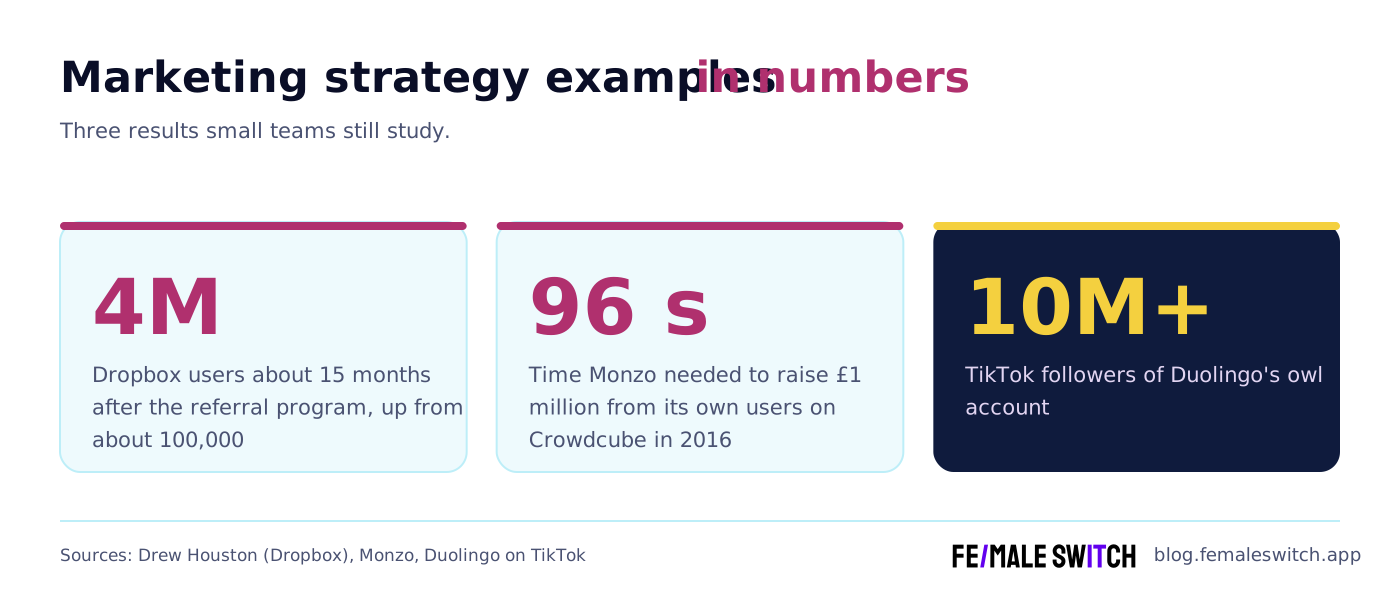
What they did: every user who invited a friend got extra free storage, and so did the friend. Result: Dropbox grew from about 100,000 to 4 million users in roughly 15 months between 2008 and 2010, as founder Drew Houston later described. Copy it: reward both sides with something that costs you little and makes your product better, such as an extra month, more credits or access to a paid feature.
2. Airbnb: founders fixing the quality problem by hand
What they did: the founders saw that New York listings had poor photos, rented a camera and photographed the apartments themselves. Result: co-founder Joe Gebbia has said weekly revenue in the city doubled soon after. Copy it: find the one thing that stops customers from buying and fix it manually for your first 20 customers before you automate anything.
3. HubSpot: a free tool that answers one question
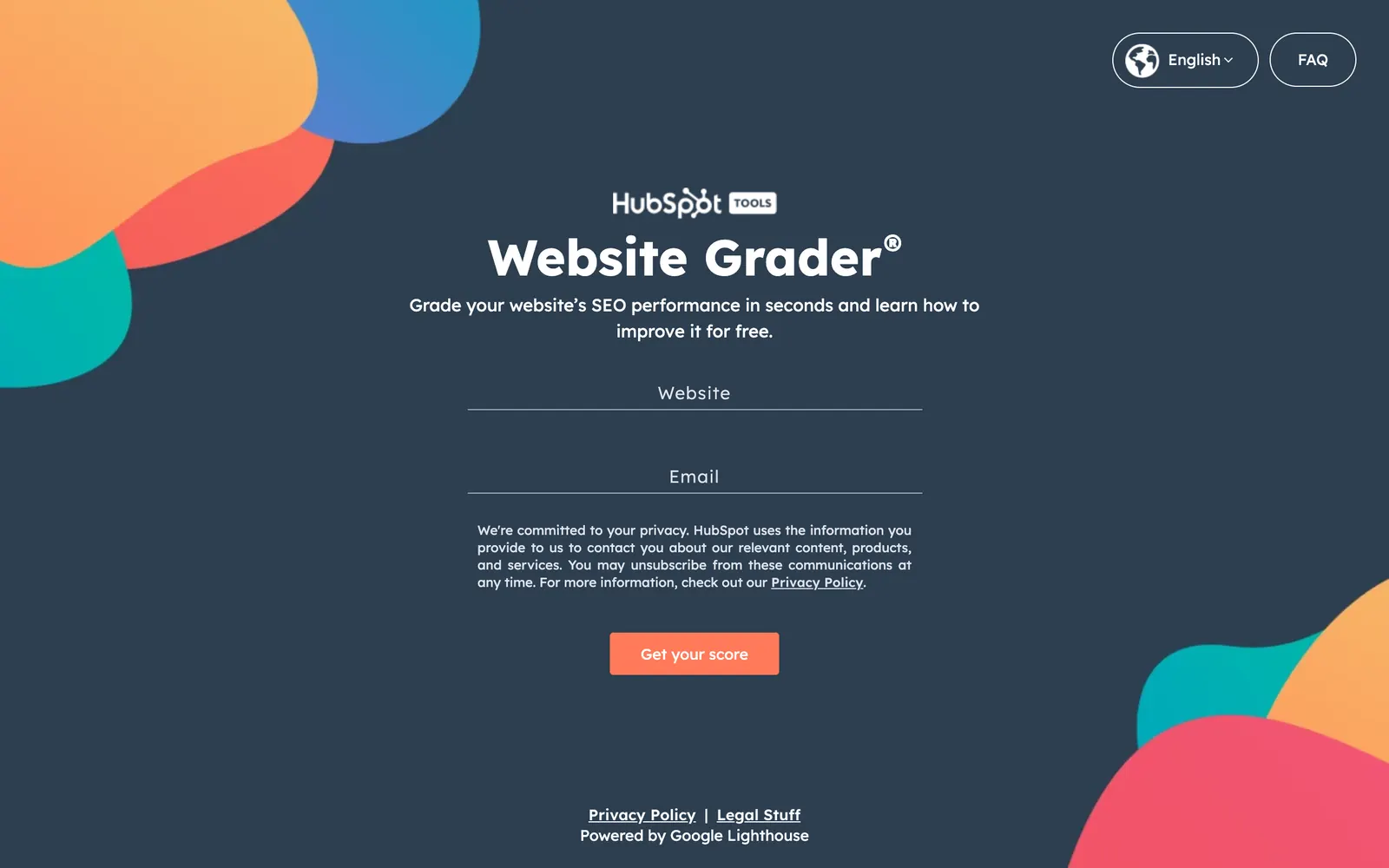
What they did: HubSpot launched Website Grader, a free tool that scores any website and suggests fixes, and built its "inbound marketing" brand around it. Result: the grader has scored millions of sites and still collects leads today. Copy it: a calculator, checker or template that solves one small problem for your buyers, built with a no-code tool in a weekend.
4. Canva: a template page for every search
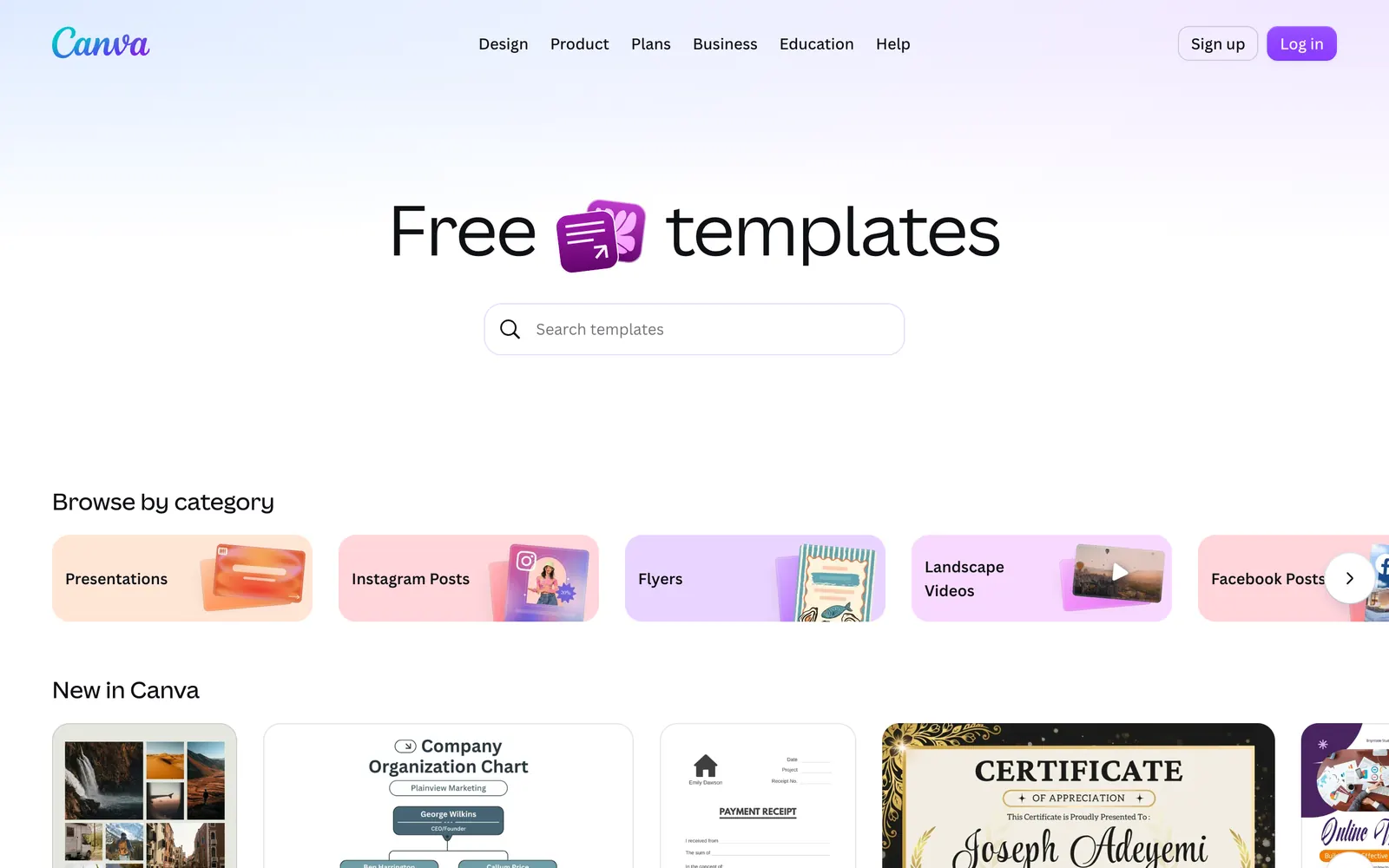
What they did: Canva publishes a template collection for nearly every design people search for, from "Instagram post" to "wedding invitation", and each one opens in the editor. Result: those pages bring non-designers in from search every day, and many leave with a finished design and an account. Copy it: one useful page per customer question, each with a direct path into your product.
5. Glossier: a community before a product
What they did: Emily Weiss ran the beauty blog Into The Gloss from 2010 and launched Glossier in 2014 to readers who already trusted her, asking them what products they wanted. Result: a brand whose first products went to an audience that had asked for them. Copy it: start a newsletter, group or blog for your future customers now, and ask them to shape your first product. Run proper customer interviews with the Mom Test so their answers reflect real behaviour.
6. Duolingo: a mascot with a personality on TikTok
What they did: Duolingo's team let its green owl post chaotic, trend-driven videos on TikTok. Result: the account passed ten million followers and became a case study in brand voice. Copy it: pick one channel, give your brand a consistent character and post fast reactions to what your audience already watches.
7. Slack: selling calmer teams
What they did: in his internal memo "We Don't Sell Saddles Here", Stewart Butterfield told the team to market the change customers feel, less email and calmer teams, and new teams spread Slack by inviting colleagues. Result: one of the fastest-growing business apps of the 2010s. Copy it: rewrite your homepage headline around the change your customer feels, then make inviting a teammate a one-click step.
8. Gymshark: products in the hands of creators
What they did: from 2012, founder Ben Francis sent clothing to fitness YouTubers who already trained in front of large audiences. Result: a UK gym-wear brand that grew into a global business with creator partnerships at its centre. Copy it: list 20 small creators your customers follow and offer them your product with no strings attached; keep working with the three who respond best.
9. Monzo: customers as investors
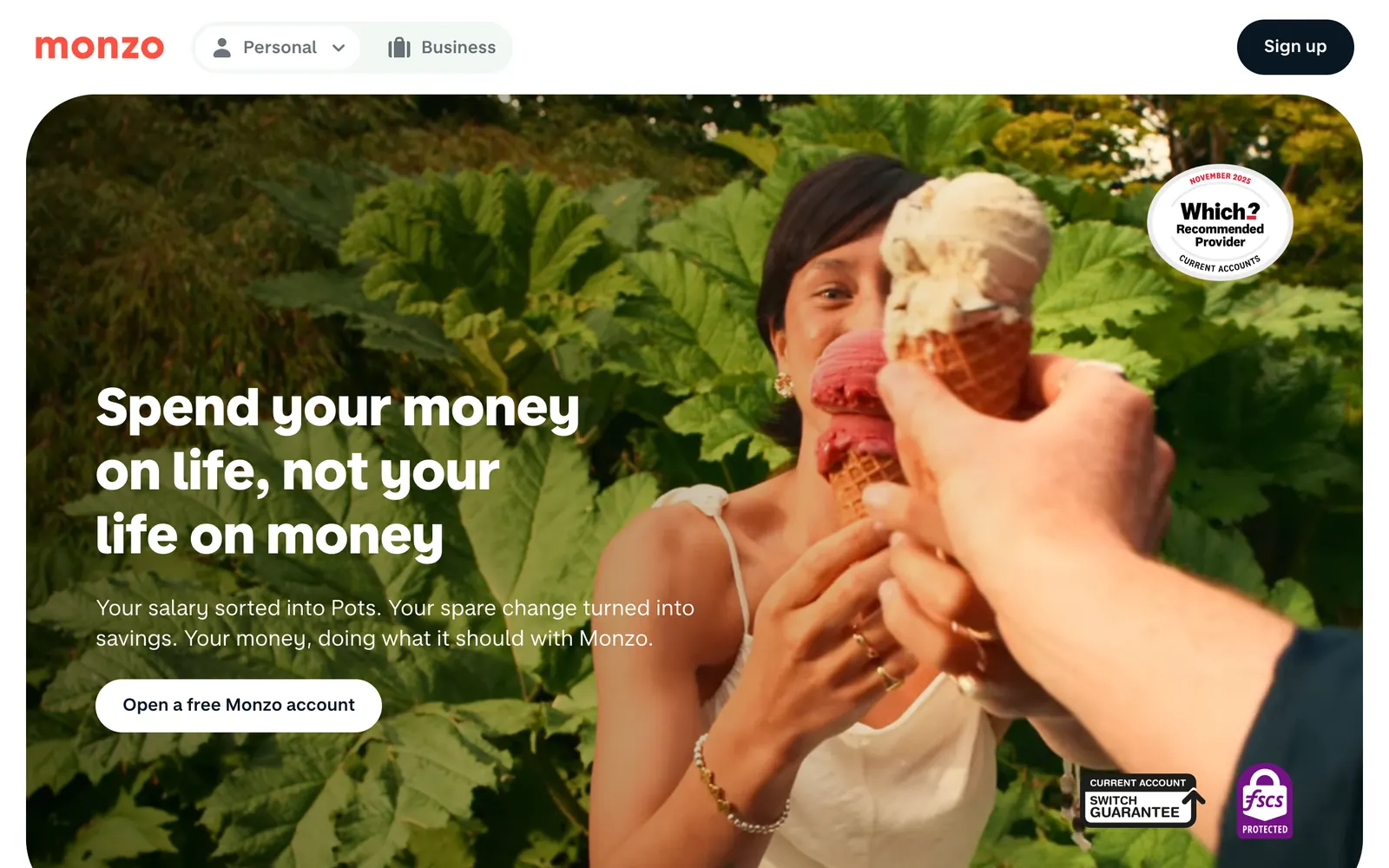
What they did: the UK bank opened a crowdfunding round to its own users on Crowdcube in 2016. Result: £1 million raised in 96 seconds, and thousands of customers with a personal stake in the brand. Copy it: give early users ownership of something, whether a founding member badge, a vote on which feature you build next or a community forum where the team answers in public.
10. Notion: users who build and share templates
What they did: Notion opened a template gallery where users and independent creators publish their own setups, and supports local community groups around the world. Result: the marketplace lists more than 70,000 templates, and each one works as a small advert for Notion. Copy it: let customers publish what they make with your product and give the best ones a place on your site.
How do these marketing strategies compare for a startup?
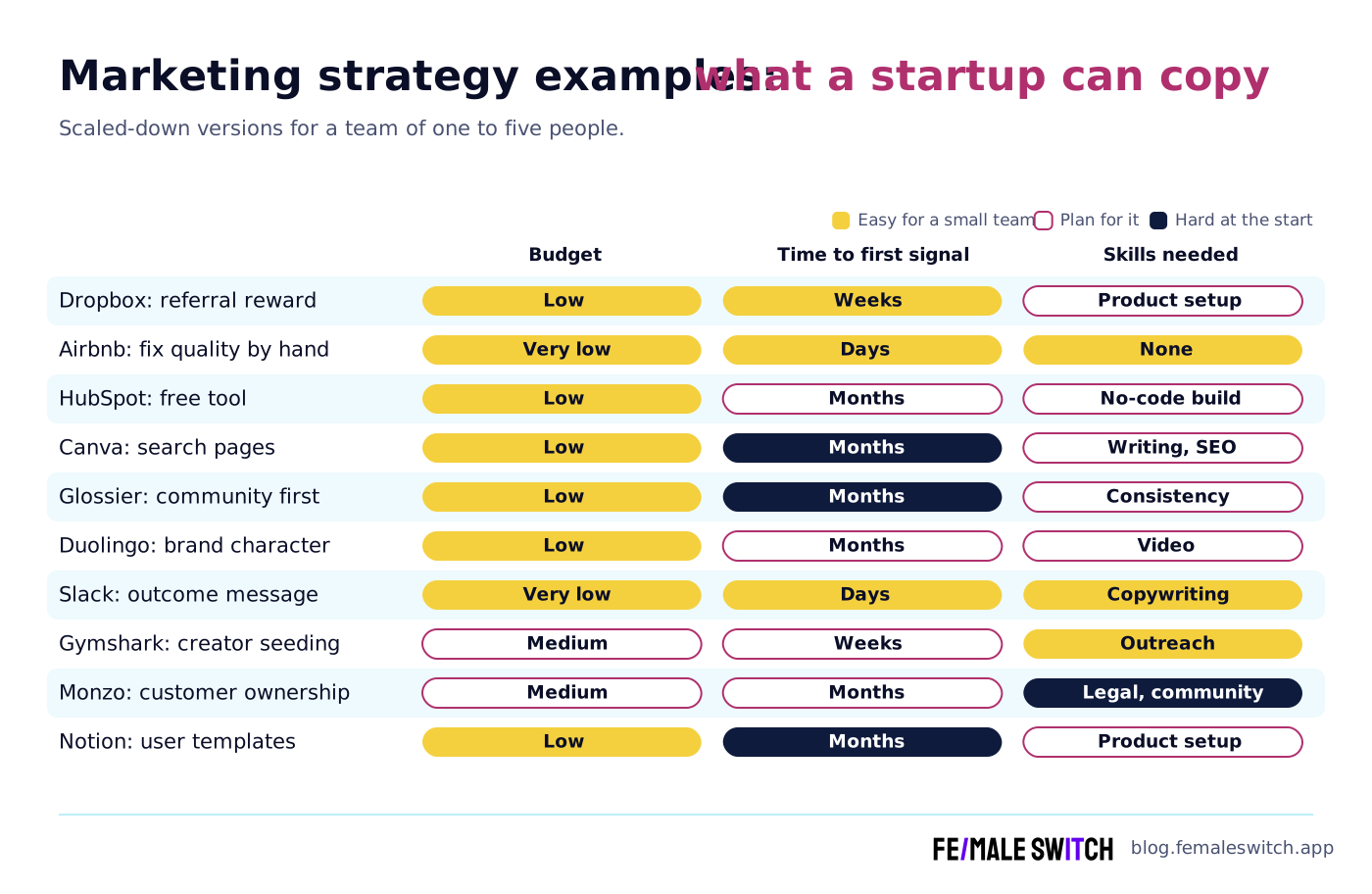
| Company | Strategy | Budget to test | First signal within |
|---|---|---|---|
| Dropbox | Two-sided referral reward | Low | 2 to 4 weeks |
| Airbnb | Manual quality fix | Very low | 1 to 2 weeks |
| HubSpot | Free tool | Low | 1 to 3 months |
| Canva | Search pages per question | Low, time-heavy | 3 to 6 months |
| Glossier | Community first | Low, time-heavy | 3 to 12 months |
| Duolingo | Brand character on social video | Low | 1 to 3 months |
| Slack | Outcome-based message | Very low | 1 to 2 weeks |
| Gymshark | Creator seeding | Medium | 1 to 2 months |
| Monzo | Customer ownership | Medium | 1 to 3 months |
| Notion | User-made templates | Low | 3 to 6 months |
The timings are our estimates for a small team testing a scaled-down version of each idea.
How do you pick the right marketing strategy for your startup?
- Start from where your customers already are. A strategy on a channel they never use fails no matter how clever it is.
- Pick one strategy for 30 days. Two at once makes it impossible to tell which one worked.
- Write the pass mark before you start, such as 50 sign-ups, 10 replies or 3 paying customers.
- Do it by hand first, the Airbnb way, and automate only what works.
- Keep the plan on one page with the goal, audience, message, channel and weekly numbers.
Which mistakes do startups make when copying big-company strategies?
- Copying the tactic without the conditions. Dropbox's referral worked because people shared files with each other anyway.
- Copying the budget-heavy phase. Look at what a company did in its first year, not at its current ads.
- Stopping after one week. Most of these strategies need a month before the numbers mean anything.
- Measuring likes instead of customers. Track sign-ups, replies and payments per strategy.
Which strategy should you test first?
If you already have a few happy users, start with a referral reward. If you have none, fix the biggest buying obstacle by hand, like Airbnb, and write about it. Run one strategy for 30 days with a clear pass mark, keep what works and drop the rest.
FAQ about marketing strategy examples
What is a good example of a marketing strategy?
Dropbox's referral program is a classic: users earned free storage for every friend who joined, and the company grew from about 100,000 to 4 million users in roughly 15 months.
What marketing strategy works best for a startup with no budget?
Founder-led tactics: talking to customers, fixing their biggest obstacle by hand, publishing answers to their questions and asking happy users for referrals.
What are the 4 Ps of a marketing strategy?
Product, price, place and promotion. A startup strategy decides each one for a specific customer and tests them in small steps.
How did Airbnb market itself at the start?
The founders photographed New York listings themselves to fix poor photos, and Joe Gebbia has said weekly revenue in the city doubled afterwards.
What is a referral marketing strategy?
Rewarding existing customers for bringing new ones, ideally with a reward for both sides that also makes your product more useful.
How long should I test a marketing strategy?
About 30 days with a pass mark set in advance. That is long enough to see a signal and short enough to switch if nothing happens.